Welcome to VMR MINING

A mining news blog providing industry professionals with real-time news and analysis, The blog covers regional news from different Mining regions in India and updates it’s readers with issues affecting Indian mining industry, created by Virginia Mining Resources

Showing posts with label World Bank. Show all posts
Hailed as "the bright spot" in a gloomier global economy, India outpaced China as the world's fastest growing economy in 2015 and is expected to clock 7 to 7.5 percent growth in the new year provided the reform momentum continues and the business environment improves.

Finance Minister Mr. Arun Jaitley says that subdued global economy and moderate private sector investment will continue to pose challenges, while his top priorities for the new year include rolling out the long-delayed Goods and Services Tax (GST), rationalizing direct taxes, ensuring further ease of doing business and putting more money for social and physical infrastructure.

While the need for further growth remain continued to be underlined by the experts as well as the policymakers as a key requirement for India to maintain its growth momentum, World Bank's Chief Economist Mr. Kaushik Basu is confident that India can continue to top the charts with the fastest growth among all major economies.

Expecting India to grow at 7 to 7.5 percent in 2016, Mr. Basu said, "India will still be the leader among major economies. Not only in 2015, but we expect India to lead that chart in 2016 as well."

It will still remain off the targeted growth rate of 8 to 10 percent in the foreseeable future unless the reforms momentum shifts to a much faster gear.

Going forward, Mr. Jaitley will have a tough time in sticking to the fiscal road-map (3.5 percent of GDP in 2016-17), while taking care of additional outgo towards 7th Pay Commission award and One Rank One Pension (OROP) for retired defense personnel.

For the current financial year ending in March, the latest estimates peg the Gross Domestic Product (GDP) growth rate at 7 to 7.5 percent, which will be significantly lower than 8.1 to 8.5 percent predicted by the government in February 2015.

Although the year began with a lot of promise, the growth rate could not pick up as much as expected, mainly because of faltering global economy, decline in exports, deficient rains, and an inability of the government to push big-ticket reforms like GST and land acquisition law.

India's economic growth still accelerated to 7.4 percent in the July-September quarter, overtaking China as the world's fastest growing major economy, on pick up in manufacturing, mining and services sectors. Multilateral lending agency International Monetary Fund (IMF) termed India as a 'bright spot' in otherwise slowing global economy.

The 1.25 percent reduction in key interest rate by the Reserve Bank of India (RBI) in 2015, coupled with a host of steps taken by the government to improve the ease of doing business, is likely to give a push to the economy.

In 2015, the economy has been a beneficiary of a huge meltdown in crude oil prices, giving a great elbow room to the government to keep its finances in shape in a year, which otherwise witnessed subdued domestic demand and quite a sluggish external market.

While exports were bruised and kept declining for the entire year, private consumption within the domestic market received a cushion from the falling auto fuel bills.

Mr. Jaitley said that rolling out GST regime is "certainly" doable in 2016 and he was in "continuous touch" with the Congress in a bid to persuade them to cooperate in Rajya Sabha for passing the Constitution amendment bill for the new indirect tax regime.

"I hope that in the next session (of Parliament), the GST will make headway," he said.
Looking back at 2015, Mr. Jaitley said India has been the bright spot with growth prospects of 7 to 7.5 percent despite global slowdown and adversities, and expressed optimism that the growth rate which is "quite good" will improve further in the months to come.

Confederation of Indian Industry (CII) Director General Mr. Chandrajit Banerjee said that 2015 is coming to an end with some commendable achievements for the Indian economy. During the year, the growth momentum picked up, inflation climbed down and the twin deficits remained in control, he said.

"India was able to gain from the decline in international prices of oil and other commodities. This helped the turnaround in the economy," he said.

In the mid-year economic analysis tabled in Parliament, the Finance Ministry said the economy has consolidated the gains achieved in resolving macro economic stability from the beginning of the last fis
cal.

"Given the challenges of real GDP measurement, we estimate that real GDP for the year as a whole will lie in the 7 to 7.5 percent range. Consumer Price Index (CPI) also known as retail inflation is likely to be within the RBI's target of about 6 percent," the Mid-Year Economic Analysis 2015-16 tabled in Parliament said.

(Source – Assorted with the inputs from PTI)
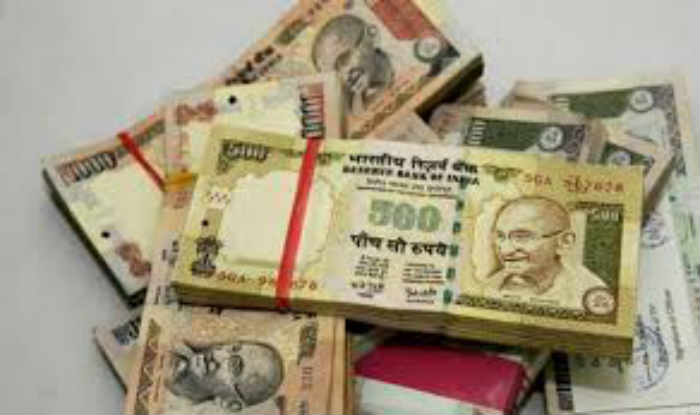
Notwithstanding a sharp cut in the government's growth forecast at the fag end, 2015 will go down as the year when India emerged as the fastest-growing large economy, despite setbacks such as 12 months of negative export growth, another bad monsoon and roadblocks to the far-reaching goods and services tax regime.

In addition to growth, the economy also saw some positives. Global crude oil prices fell to the lowest levels in over a decade, checking the balance of payments from going awry, inflation rate remained more-or-less under control, despite spikes in food prices, and economic reforms got a big push, notably in the form of further opening up of a host of industries to foreign equity.

India's real GDP in the first half of the current fiscal grew at 7.2 percent as per official data, which was slightly lower in comparison to the GDP growth of 7.5 percent in the previous fiscal.

India's external position improved at the same time. Forex reserves are a little above $350 billion in November 2015 as compared to a little over $270 billion in July 2013. Net foreign direct investment (FDI) inflows have increased to $17 billion in the first half of 2015-16 in comparison to $15.8 in the same period last year. The second quarter's current account deficit logged at a level of 1.6 percent of GDP.

However, the global slowdown continued to weigh on exports, which have declined for 12 straight months. The government said this was also pulling down growth but felt the situation would improve in the coming months.

On the fall in the value of the Indian rupee, the finance ministry's mid-term economic review attributed it considerably to the major devaluation of the Chinese Yuan.

The year also began with India's changing the way it calculated its gross do-mestic product under a new series, though the controversy over the changed methodology employed refuses to die down with economists even terming it obscure.

Changing the base year to 2011-12 from 2004-05 in January, the Central Statistics Office said India's real GDP, that is adjusted for inflation, grew by seven percent in the first quarter of this fiscal, slower than the 7.5 percent expansion in the quarter before - but much higher than 6.7 percent registered in the first quarter of the last fiscal.

Mr. Arun Kumar, till recently a professor at Jawaharlal Nehru University here, told IANS that in view of negligible industrial growth, drought-like conditions in past years and no substantial increase in profits and wages, the new numbers fall flat from the point of credibility.

"Even input costs, that are now low with falling oil prices, were not low in the period 2011-12. Let the statistics office show the growth figures for up to 10 years prior to the base year for us to consider the new series seriously," Mr. Kumar said.

The midyear review released this month lowered the economic growth forecast for the current fiscal to the 7-7.5 percent range, from the previously projected 8.1-8.5 percent, mainly because of lower agricultural output due to deficit rainfall.

It also said there may be a need to reconsider next year's fiscal deficit target of 3.5 percent.

"GDP growth has been powered only by private consumption and public investment is a concern. The proposed wage hike for government workers may impact plan for next fiscal." The economy continues to send "mixed signals" over growth, while all economic indicators were not yet aligned in pointing to a higher trajectory of growth, it said.

India's eight core industries, representing major infrastructure sectors, grew at 2.3 percent in the April-September period of the current fiscal, compared to a rate of 5.3 percent in the same period of the previous fiscal - the fall in growth rate caused by lower expansion in electricity, coal and cement sectors and negative growth in steel and natural gas sectors.

Mr. Jaitley's first full union budget also announced an agreement earlier in the year with the Reserve Bank of India (RBI) that it constitute a Monetary Policy Committee to determine by majority vote on the pol-icy rate required to achieve the inflation target.

Meanwhile, RBI Governor Mr. Raghuram Rajan cut the interest rate in January for the first time in nearly two years and followed up with two other reductions to bring down the central bank lending rate to 6.75 percent.

Politics intervened during the year to prevent the enactment of India's most important reform of its indirect tax regime by way of the pan-India Goods and Services Tax ( GST) that the government has targeted for implementing from April next year, because the ruling NDA does not have the numbers to pass the constitution amendment bill in the upper house.
Highlights
  • Real GDP in first half of fiscal grew at 7.2 percent
  • India emerges as fastest-growing large economy
  • Forex reserves of over $352 billion as on the first week of December.
  • FDI inflows increased to $17 billion in the first half of 2015-16
  • Indian basket of crude oils fell below $40 a barrel
  • Foreign investment limits raised in defense, real estate and insurance, foreign equity in railways
  • Retail and wholesale inflation rates rose in November to 5.41 percent and (-)1.9 percent respectively, largely due to an increase in food prices
  • Infrastructure sectors grew at 2.3 percent in the first half of fiscal
  • Government lowers GDP growth estimate for fiscal by one percent to 7-7.5 percent
(Source – The Economic Times, 24-December-2015)


The US Federal Reserve has raised its benchmark short-term interest rates by 0.25 percent after keeping it around zero since the start of the 2008 financial crisis.

The hike, announced after a meeting of the Fed’s top policy-making body on Wednesday was broadly along anticipated lines.

The move will have repercussions across the global financial system. Here is what India should watch out for.


Dollar Flight
Higher interest rates will make the US markets more attractive for foreign investors. Funds will likely interpret the rate hike, albeit a small one, as a signal of the US central bank’s willingness to raise rates further in the coming months. This could prompt funds to move funds quickly from emerging markets such as India to the US in expectation of higher returns in the months to follow.

Currency Blues
Currency values, pretty much like other commodities, are determined by demand and supply. The rupee’s value against the dollar will be determined primarily by whether dollars are coming in or going out of India. In case of a US rate hike, the demand for dollars to move away from India will rise weakening the rupee. Some analysts reckon that the rupee could fall to below 70 to a dollar. The rupee, closed at 66.73 to a dollar on Wednesday not very far from its record low of 68.85 it had touched on August 28, 2013.

Shaky Markets?
A copious outflow of foreign funds from India can adversely affect the equity markets as well. A sustained pull out by foreign institutional investors (FIIs) could temporarily bring down the benchmark indices—the 30-share BSE Sensex and the 50-Share NSE Nifty. Retail investors, however, should avoid panic selling and take only well-researched and informed decisions not guided by short-term volatility.

Costlier Imports
A depreciating rupee will make imported goods costlier. So, expect computers, imported mobile phones, imported apples and chocolates among others to become costlier. It could also negate the gains from ultra-cheap crude oil. Cheap crude oil, currently at an 11-year low, has benefitted India that imports more than 75 percent of its oil needs. A weak rupee triggered by a dollar outflow, however, could offset this as it could increase the landed cost of oil shipments in local currency terms.

Costly Education and Travel
A weaker rupee implies students end up paying more to buy dollars to pay for fees, even though the fee in dollar terms remains unchanged. So, study loans might go up. Ditto for foreign travel. A weaker rupee implies vacationers end up paying more to buy dollars to pay for air tickets, hotel tariffs, shopping and other expenses. Even though the tariffs in dollar terms remain unchanged, a lower rupee could force people to buy more foreign exchange before they head out for the vacation.

No More EMI Cuts?
The Reserve Bank of India (RBI) has cut its key lending rate, the repo rate by 1.25 percentage points since January 2015. A weaker currency, however, could dash hopes for more rate cuts. This is because, the RBI may be hesitant to cut interest rates to main-tain India’s attractiveness as favored destination for foreign funds and bring in dollars to stem the rupee’s fall.

No Cheer for Exports Either
If you are exporter, a weaker rupee would mean your earnings in rupee terms will go up. But slowdown in EU, India’s biggest export markets, has forced orders
to dry out. India’s merchandise exports shrank 24 percent in November, the 12th successive month of contraction, amid a global demand slowdown. India has to contend with rising competition from China, which is struggling to claw out of its worst slowdown in more than a decade hit by shrinking exports. China has devalued its currency the yuan to its lowest in nearly three years.

Costly Debt
A dollar outflow and the resultant slide in the rupee’s value could hurt profitability of many companies. Companies that borrowed dollars from overseas banks will be the worst hit as repaying loans will be-come costlier, hurting bottom-lines.

Higher Inflation
India’s retail inflation has crept up to a 14-month high of 5.41 percent in November driven by costlier food items. While retail inflation measured by the consumer price index (CPI) that captures changes in shop-end prices inched up from 5 percent in October, wholesale prices also mirrored a similar rising trend. A weaker rupee could fan inflation further. Imported raw material such a copper, aluminum and machinery will turn costly and squeeze profit margins. This may prompt companies to raise prices of consumer goods such as cars and televisions.

Focus on Reforms
India is competing with other emerging countries to keep the flow of dollars intact. The focus will shift towards foreign direct investment (FDI) given that FIIs or hot money is expected to flow out quickly. India’s ability to remain at an attractive FDI destination will largely depend on the speed of reforms, removing red-tape and eliminating bureaucratic delays.   

(Source – Hindustan Times, 17-December-2015)
Cheering the spurt in industrial output which grew by 9.8 percent in October, India Inc. termed it as a booster for the economy, hoping that the strong growth trend would continue on the back of reforms.

"The industrial growth on the back of an impressive double digit expansion in manufacturing should no doubt be considered a morale booster for the economy," Assocham President Mr. Sunil Kanoria said.

"We look forward to strong industrial growth recovery, with the sector registering double digit growth in the coming times," PHD Chamber Secretary General Mr. Saurabh Sanyal said.

In a big jump, the October industrial production grew 9.8 percent on an annual basis, riding on the back of a robust growth in consumer products and capital goods during the festive season.

IIP growth for September has been revised upwards to 3.84 percent while it was -2.7 percent in October 2014. The manufacturing sector, a key indicator of economic activity, grew 10.6 percent year-on-year in October.

Electricity generation expanded 9 percent and the mining sector was up 4.7 percent. "Though manufacturing registered a high growth in October, the low base in major sectors like capital goods and consumer durables has contributed significantly to this high growth.

"Nonetheless, the outlook for growth remains positive and can be strengthened in coming months if pace of reforms continues," FICCI Secretary General Mr. A Didar Singh said. However, Mr. Singh pointed out that the global slow-down continues to impact trade and affect India's exports adversely thus impacting manufacturing growth especially when the domestic demand is also sluggish.

Hailing the October industrial production growth, engineering exporters' body EEPC India said a similar feat is desperately required in the country's export performance. India's exports remained in the negative territory for the 11th month in a row by registering a dip of 17.53 percent in October to $21.35 billion due to a demand slowdown, while trade deficit showed an improvement.

The growth in the consumer durables segment was a whopping 42.2 percent in October over the same month last year. While, the consumer goods category saw a growth of 18.4 percent and consumer non-durables rose by 4.7 percent. The data further showed that capital goods segment grew 16.1 percent while the expansion in basic goods came in at 4.1 percent.


(Source – Assorted with the inputs from PTI)
India's economic expansion may have gained speed last quarter as manufacturing and services output improved even as weak rains hurt agriculture, economists said.

Gross domestic product in the three months ended Sept. 30 rose 7.4 percent from a year earlier, according to the median estimate in a poll of 14 economists by The Wall Street Journal. That is a step up from the 7.0 percent expansion in the preceding quarter.

The government is scheduled to issue the data on Monday.

"India's GDP growth is expected to have improved as industry clocked the highest output gains in over four years, while services remained resilient," said Mr. Sujit Kumar, an economist at Union Bank of India.

Industrial production data that were released earlier show output of manufacturing, mining and utilities firms rose 4.7 percent from the previous year during the quarter. That is a modest pickup from the 3.2 percent increase in the previous quarter and the strongest pace of expansion since the three months ended June 2011.

Still, the country received 15 percent less than the average level of rainfall during the June to September monsoon season the second successive year of shortfall. That is expected to weigh on farm production.

Some economists believe the weakness in the agricultural sector could more than offset the better performance of other sectors. A sustained decline in India's exports, which have been falling for almost a year now, also are expected to weigh on the economy.

Most economists predict Asia's third-largest economy will grow about 7.5 percent this year, helped by policy measures aimed at improving business conditions in Asia's third-largest economy.

In September, the Reserve Bank of India lowered its growth forecast to 7.4 percent from 7.6 percent, despite the four rate cuts it has delivered this year to stimulate investment. A further cut by the RBI, which will next review policy on Tuesday, isn't widely expected until next year.

"The RBI lowered its growth projection citing global headwinds, weak rains and sluggish private sector investment activity," Ms. Radhika Rao, India economist at DBS, said in a research note. "We expect these factors to also influence Monday's GDP numbers, but firm discretionary spending will pick part of the slack."

The spotlight will now be on the winter session of Parliament that started this week. Investors are hoping the government will be able to reach a consensus with opposition parties to help push through changes that will help growth, particularly one to enable the implementation of a nationwide uniform tax on goods and services.

"If some important bills get passed, then it will be positive for investor and business sentiment," said Mr. Saugata Bhattacharya, chief economist at Axis Bank. "That would translate to increased economic activity."

(Source – Market Watch, 27-November-2015)
“Healthy 7.5 percent GDP growth for India for the fiscal year ending March 2017 (FY2017) and a pick-up in manufacturing activity will be broadly supportive of business growth,” said Mr. Vikas Halan, a Moody’s vice-president and senior credit officer.

Most non-financial corporates Moody rates in India (Baa3 positive) will benefit from strong domestic growth and accommodative monetary policy, although weak global growth and a potential U.S. rate hike will weigh on businesses, said Moody’s 2016 outlook presentation for Indian non-financial corporates.

However, according to Mr. Halan, the corporations will also remain vulnerable to the volatile Indian rupee as against the U.S. dollar and to low commodity prices, which has in turn led to a sharp decline in external trade.

“The Modi administration so far this year has been unable to enact legislation on key reforms, including a unified goods and services tax and the Land Acquisition Bill. It seems highly unlikely that the major reforms will get enacted by the upper house of the Indian parliament where the ruling coalition is in minority. A failure to implement these reforms could hamper investment amid weak global growth,” said the report.

The fall in commodity prices has benefited many Indian corporates given the country’s status as a net importer of raw materials and its recent history of high inflation.

The resultant moderating inflation should result in lower borrowing costs for corporates and yields on corporate bonds, says Moody’s.

By sector, Moody’s expects upstream oil and gas companies to benefit from lower fuel subsidy burdens, although low crude and domestic natural gas prices will continue to hurt profitability. Refining and marketing companies, meanwhile, should benefit from healthy margins as demand growth outpaces expected capacity additions.

Moody’s negative outlook for the steel industry reflects elevated leverage and an extended period of low prices due to continuing steel imports, while the negative outlook for metals and mining companies reflects bleak global commodity prices.

In the real estate sector, Moody’s expects demand to improve in 2016 on the back of lower interests rates, although approval delays could push back project launches for property developers.

In the auto sector, Moody’s expects retail sales volumes to grow 6 percent in 2016 on the back of sus-tained growth in passenger vehicles sales and a recovery in commercial vehicle sales.

The telecom companies that Moody rates in India have reported improved revenue per user (ARPU) and EBITDA margins. However, competition remains intense and the regulatory framework continues to evolve.

(Source – The Hindu, 26-November-2015)
NITI Aayog’s vice-chairman Mr. Arvind Panagariya on Friday exuded confidence that India could be an $8-trillion economy within next 15 years or even less if it continues with growth-enabling policies.

"The prospects for our economy to become the third largest one in the world in less than 15 years are excellent today," Mr. Panagariya said while delivering the 6th R.K. Talwar memorial lecture on 'Growth, Poverty and Economic Trans-formation', organized by the Indian Institute of Banking & Finance.

Mr. Raj Kumar Talwar was one of the most successful Chairmen of the SBI. He led the bank from 1969 to 1976.

The World Bank and the IMF as well as many analysts have predicted that the country would become the third largest economy after China and the US with a GDP of $10 trillion by 2030.

"Our savings rate remains nearly 30 percent of the GDP and has prospects to rise above 35 percent, a level reached in 2007-08. We have a young population so that labor shortages will not be an impediment to growth," Mr. Panagariya said, adding our very low per-capita income leaves us far away from the global technology frontier.

Describing the late Mr. Talwar as "the rarest of rare officers that we have ever produced," he said the late banker was so "spotless in his personal and professional life that even an all-powerful Emergency-era government, determined to remove him from office for refusing to do its unjust bidding, could not muster enough courage to do so.

"Even after a CBI inquiry and a legislative amendment later, the then government could only bring itself to asking Mr. Talwar to take a leave of absence for the last 13 months of his tenure," he recalled.

Stating that only the higher growth can lead to poverty reduction, he said during the first three decades, the economy grew at a snail's pace with per-capita income rising just 50 percent by 1980-81. In the following decade, there was some acceleration with another 50 percent added to the original per-capita income by 1990-91.

The 1990s saw further acceleration, adding full 100 percent over the 1950-51 income. The fastest gain came in the new millennium, however, with full 300 percent added to the original per-capita income. Movements in poverty mirrored these movements in per-capita income, he said.

With extremely low initial per-capita income, slow growth meant that per-capita income remained low and no perceptible assault on poverty could be done, he argued.

"Once growth picked up, however, per-capita income rose and poverty too began to recede. The sharper the rise in incomes the sharper was the decline in poverty.

Poverty fell more sharply in rural areas thereby partially bridging the gap in poverty between the two regions. The association between growth and decline in poverty is unmistakable," he con-cluded.

(Source – Assorted with the Inputs from PTI)

www.virginiamr.in
India’s gross domestic product (GDP) likely grew around 7.3 percent in the July-September quarter, up from 7 percent in the first quarter of FY16, but it remained below the country’s potential, Moody’s Analytics said on Friday.

Though India’s potential is around 9-10 percent GDP growth, it said closing the negative output gap is dif-ficult as external headwinds are blowing stronger and the government has failed to deliver promised reforms.

“We believe GDP will grow at 7.6 percent this year and in 2016,” it said. Key economic reforms including in land acquisition, a national goods and service tax, and revamped labor laws, would help the country deliver higher GDP growth, it said. The World Bank on Thursday retained growth forecast for India at 7.5 percent for this year citing a pick up in investment due to higher capital expenditure by the Centre. In-dia’s GDP grew by 7.3 percent in FY15.

However, Moody’s cautioned that getting the Rajya Sabha nod to some of the key reforms could get ob-structed by an “obstructionist” opposition as recent controversial comments from ruling-Bharatiya Janata Party members won’t help the government’s cause. The ongoing state election in Bihar-

On the other side, the Reserve Bank of India has helped kick-start the economic recovery by cutting the repo rate by 125 basis points this year. Banks have also started passing the rate cut benefits to consumers. Further rate cuts in 2015 are unlikely, Moody’s said.

While global market sentiment has been down, Indian equities have also suffered from a loss in domestic sentiment. Bank balance sheets are still reeling from the economic slowdown in 2013. Profits slumped earlier in the year, and nonperforming loans hit a 14-year high. Thus, banks have been reluctant to expand investment. This explains the little sign of an upward trend in credit growth this year.

There are also indications that investors have been less optimistic about India’s economic prospects. Net financial flows into equity were around $16 billion in
2014. However, they are unlikely to reach those highs this year. The same can be said about financial flows into India’s debt market. The RBI is consistently looking to improve India’s banking and financial structures. “We believe a move towards full capital account liberalization is inevitable in India. This will likely occur in the next two to four years. A freer capital account will give Indian companies greater access to overseas markets, lower borrowing costs, and facilitate credit growth—a key ingredient to increasing investment,” it added.

one of India’s largest and poorest states-could prove pivotal to (prime minister) Mr. Modi’s leadership, it said. A win, would help the ruling party secure a majority in the Rajya Sabha. Unlike in the Lok Sabha, the GST bill is held up in the Rajya Sabha as the government does not have a majority in the upper house.
  • Moody’s Analytics Says
  • Low interest rates will buttress Indian economy in the short term, but reforms are needed to reach long-term potential growth.
  • Better political outcomes could help India achieve reforms
  •  Financial market sentiment has faded; the stock market and foreign inflows are down
  • External headwinds are growing stronger and are hurting India’s exporters
  • Further rate cuts in 2015 are unlikely, but there is room for more next year.

(Source – The Financial Express, 20-October-2015)   
India has moved up one position to become the world’s seventh most valued ‘nation brand’, with an increase of 32 percent in its brand value to USD 2.1 billion.

The US remains on the top with a valuation of USD 19.7 billion, followed by China and Germany at the second and the third positions respectively, as per the annual report on world’s most valuable nation brands compiled by Brand Finance.

The UK is ranked 4th, Japan is at fifth position and France is sixth on the list. While India and France have moved up one position each since last year, all the top-five countries have retained their respective places. However, the surge of 32 percent in India’s ‘nation brand value’ is the highest among all the top-20 countries on the list.

China has retained its second position despite a decline of one percent in its brand value to USD 6.3 billion. Brand Finance said it measures the strength and value of the nation brands of 100 leading countries using a method based on the royalty relief mechanism employed to value the world’s largest companies.

The nation brand valuation is based on five year forecasts of sales of all brands in each nation and follows a complex process. The Gross domestic product (GDP) is used as a proxy for total revenues.
The report also said that India’s ‘Incredible India’ slogan has worked well, while Germany suffered due to the Volkswagen crisis. About the US, the report said it remains a powerful brand with an inviting business climate.

“However its value comes in large part from the country’s sheer economic scale… The US’ world-leading higher education system and the soft power arising from its dominance of the music and entertainment industries are significant contributors too. This soft power will help the US to retain the most valuable nation brand for some time after China’s seemingly imminent rise to become the world’s biggest economy,” it added.

The study further said that China’s recent stock market turbulence and slowing growth will also extend the US’ tenure of the top spot. Among the BRICS nations, India is the only country to have witnessed an increase in its brand value with all others – Brazil, Russia, China and South Africa – seeing a dip in their respective brand valuations.

India is the second most valued among these emerging economies after China, followed by Brazil, Russia and South Africa.

(Source – Assorted with the Inputs from PTI)

for more live update you can visit www.VIRGINIAMR.com
The World Bank projected on Thursday that India’s GDP growth will remain below 8 percent till 2018, the penultimate year of Mr. Modi Government’s tenure. The projection contrasts sharply with the Government’s projection that the growth rate will cross 8 percent this year and will be in double digits before the end of its term.

“Productivity and investment need to accelerate to match India’s ambitions of double-digit growth,” World Bank’s Senior Country Economist for India Mr. Frederico Gil Sander cautioned, releasing its India Development Update.

GDP growth is expected to accelerate gradually to 7.5 percent in 2015-16 and to 7.8 and 7.9 percent in the subsequent two fiscal years, the Update projected. However, this acceleration in growth is conditional on the growth rate of investment picking up to 8.8 percent during the period 2015-16 to 2017-18, it said. “While growth will very likely remain above 7 percent in the next fiscal year, there is significant UN-certainty about the momentum of the economy.”

The projections would have been higher if the Constitutional Amendment Bill meant for the rollout of the Goods & Service Tax had cleared Parliament, Country Director World Bank India Mr. Onno Ruhl told reporters.

For the economy to achieve its potential, the Update called for three key reforms: First, boosting balance sheets of the banking sector by addressing the underlying challenges in the infrastructure sector, espe-cially power and roads. Second, continuing to im-prove the ease of doing business and enacting the GST and third, enhancing the capacity of states and local governments to deliver public services as more resources are devolved from the centre.

The World Bank flagged the contraction in exports for the past 10 months, resulting in a loss of market share, and the stressed financial sector as key concerns.
“Although India may be able to achieve fast GDP growth without export growth for a short period, sustaining high rates of GDP growth over a longer period will require a recovery of export growth…India has lost market share in the global ex-port market as India’s exports have become uncompetitive,” the Update noted.

It also cautioned that since oil prices are unlikely to fall further, reducing deficits beyond the current financial year will be another key challenge for the Modi Government.

The Update lauded the build-up in India’s foreign ex-change reserves: from a level equivalent to six months of imports in 2012-13 to nine months of imports as a consequence of the current account deficit narrowing. It projected the deficit to widen margin-ally to (-) 1.4 percent this year followed by (-) 1.7 per-cent and (-) 2 percent in the subsequent two years. It also praised the greater devolution of taxes to the states and the higher capital spending by the Centre.

(Source – The Hindu, 30-October-2015)