Welcome to VMR MINING

A mining news blog providing industry professionals with real-time news and analysis, The blog covers regional news from different Mining regions in India and updates it’s readers with issues affecting Indian mining industry, created by Virginia Mining Resources

Showing posts with label China. Show all posts
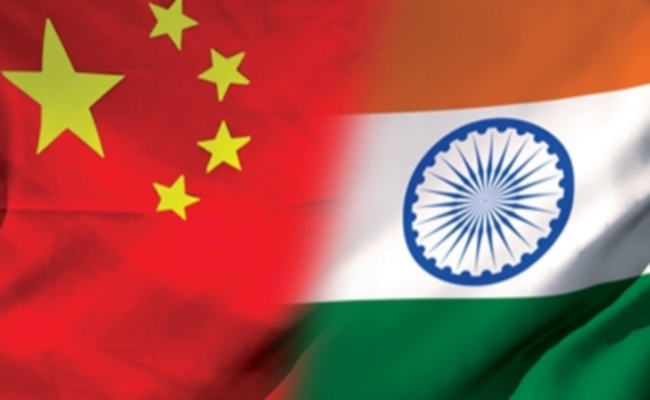
India will be a “star performer” among emerging market economies and is ex-pected to clock 7.7 percent growth in 2016, outshining China for the second consecutive year, a PwC report says.

According to the global consultancy firm, of the emerging economies, only In-dia is expected to grow faster in 2016 than its long-term average growth rate.


Among the seven emerging economies (China, India, Brazil, Mexico, Russia, In-donesia and Turkey), India will be a “star performer”, while the Brazilian and Russian economies will contract and China will slow down, the report said.

“For the second year in a row, we expect India to grow faster than China, ex-panding by around 7.7 percent in real terms,” it said.

While the G7 economies (the US, the UK, Japan, Germany, France, Italy and Canada) are expected to grow at fastest rate since 2010, led by the first two, the E7 emerging economies will grow slower than their trend rate (but still faster than the G7).

“We expect the US recovery to switch into a higher gear in 2016, while the UK will also enjoy continued consumer-led growth. We should also see at least the beginning of the end of the Eurozone crisis. The once-mighty BRICs, however, will have another tough year in 2016, with the notable exception of India,” PwC UK Chief Economist Mr. John Hawksworth said.

According to PwC, the Chinese GDP growth will ease to 6.5 percent in 2016, as growth in manufacturing and exports will continue to slow gradually. The re-port further noted that India will continue to reap the benefits of recent re-forms.

“The cut in the policy rate by the Reserve Bank of India from 8 percent to 6.75 percent last year will help support consumption and investment growth this year,” PwC said, adding that FDI in the country’s “underdeveloped” manufac-turing sector should also pick up as foreign investment caps have mostly been lifted.

Geopolitics, rather than economics, will be at the top of policymakers’ agendas, the report noted.
The migrant crisis in Europe, the response of the in-ternational community to the crisis in the Middle East and the referendum on the fate of the UK’s membership of the European Union, will be the three major geopolitical issues to dominate the news head-lines.

Meanwhile, commodity prices are expected to re-main lower for longer.
“This will be a good news for most businesses, house-holds and policymakers in commodity importing economies, but a challenge for countries that rely heavily on commodity exports,” the PwC report added.

(Source – The Financial Times, 10-January-2016)
Hailed as "the bright spot" in a gloomier global economy, India outpaced China as the world's fastest growing economy in 2015 and is expected to clock 7 to 7.5 percent growth in the new year provided the reform momentum continues and the business environment improves.

Finance Minister Mr. Arun Jaitley says that subdued global economy and moderate private sector investment will continue to pose challenges, while his top priorities for the new year include rolling out the long-delayed Goods and Services Tax (GST), rationalizing direct taxes, ensuring further ease of doing business and putting more money for social and physical infrastructure.

While the need for further growth remain continued to be underlined by the experts as well as the policymakers as a key requirement for India to maintain its growth momentum, World Bank's Chief Economist Mr. Kaushik Basu is confident that India can continue to top the charts with the fastest growth among all major economies.

Expecting India to grow at 7 to 7.5 percent in 2016, Mr. Basu said, "India will still be the leader among major economies. Not only in 2015, but we expect India to lead that chart in 2016 as well."

It will still remain off the targeted growth rate of 8 to 10 percent in the foreseeable future unless the reforms momentum shifts to a much faster gear.

Going forward, Mr. Jaitley will have a tough time in sticking to the fiscal road-map (3.5 percent of GDP in 2016-17), while taking care of additional outgo towards 7th Pay Commission award and One Rank One Pension (OROP) for retired defense personnel.

For the current financial year ending in March, the latest estimates peg the Gross Domestic Product (GDP) growth rate at 7 to 7.5 percent, which will be significantly lower than 8.1 to 8.5 percent predicted by the government in February 2015.

Although the year began with a lot of promise, the growth rate could not pick up as much as expected, mainly because of faltering global economy, decline in exports, deficient rains, and an inability of the government to push big-ticket reforms like GST and land acquisition law.

India's economic growth still accelerated to 7.4 percent in the July-September quarter, overtaking China as the world's fastest growing major economy, on pick up in manufacturing, mining and services sectors. Multilateral lending agency International Monetary Fund (IMF) termed India as a 'bright spot' in otherwise slowing global economy.

The 1.25 percent reduction in key interest rate by the Reserve Bank of India (RBI) in 2015, coupled with a host of steps taken by the government to improve the ease of doing business, is likely to give a push to the economy.

In 2015, the economy has been a beneficiary of a huge meltdown in crude oil prices, giving a great elbow room to the government to keep its finances in shape in a year, which otherwise witnessed subdued domestic demand and quite a sluggish external market.

While exports were bruised and kept declining for the entire year, private consumption within the domestic market received a cushion from the falling auto fuel bills.

Mr. Jaitley said that rolling out GST regime is "certainly" doable in 2016 and he was in "continuous touch" with the Congress in a bid to persuade them to cooperate in Rajya Sabha for passing the Constitution amendment bill for the new indirect tax regime.

"I hope that in the next session (of Parliament), the GST will make headway," he said.
Looking back at 2015, Mr. Jaitley said India has been the bright spot with growth prospects of 7 to 7.5 percent despite global slowdown and adversities, and expressed optimism that the growth rate which is "quite good" will improve further in the months to come.

Confederation of Indian Industry (CII) Director General Mr. Chandrajit Banerjee said that 2015 is coming to an end with some commendable achievements for the Indian economy. During the year, the growth momentum picked up, inflation climbed down and the twin deficits remained in control, he said.

"India was able to gain from the decline in international prices of oil and other commodities. This helped the turnaround in the economy," he said.

In the mid-year economic analysis tabled in Parliament, the Finance Ministry said the economy has consolidated the gains achieved in resolving macro economic stability from the beginning of the last fis
cal.

"Given the challenges of real GDP measurement, we estimate that real GDP for the year as a whole will lie in the 7 to 7.5 percent range. Consumer Price Index (CPI) also known as retail inflation is likely to be within the RBI's target of about 6 percent," the Mid-Year Economic Analysis 2015-16 tabled in Parliament said.

(Source – Assorted with the inputs from PTI)
The U.S. is expected to retain its status as the world's largest economy for a few years longer than analysts previously anticipated, thanks in large part to China's recent financial slowdown, according to a recent study from the U.K.- based Centre for Economics and Business Research.

But over the course of the next 16 years, the global economic landscape is expected to shift seismically from where it now stands. Though the U.S.
is still expected to hold a spot among the exclusive G-8 collection featuring some of the world's largest economies by the year 2031, a handful of other current mem-bers are likely to be less fortunate.

In 2031, China will be the largest economy in the world with a gross domestic product valued at $35.26 trillion, according to the CEBR. The U.S. will play second fiddle to the Asian behemoth, with GDP clocking in at $33.66 trillion.

The two world powers are expected to swap places in 2029, which gives the U.S. a little more time on top than the economic consultancy previously projected. Last year, the CEBR predicted the switch would take place in 2025. It attributed "slower Chinese GDP growth and a weaker currency" to the timing adjustment.

By some measures, China is already considered the world's largest economy. According to a report released last year by the International Monetary Fund that compared international economies by adjusting for exchange rates and purchasing power, China's economy had already surpassed America's as the world's largest.

But most analysts don't consider that purchasing power metric to be a primary measuring stick. The U.S. is still generally hailed as the world's largest economy and is likely to retain that title for at least the next decade.

"No doubt, [China's] GDP is worse than that 6 or 7 percent that they report," says Mr. John Canally, a senior vice president and chief economic strategist at LPL Financial. "No doubt they'll lower that target next year, but there's also no doubt that they'll pull out all the stops to make sure that the Chinese economy at least stabilizes next year."

China and the U.S. are hardly the only nations whose economic standing is expected to shift by 2031, according to the CEBR. France and Italy are expected to lose their places among the eight largest economies in the world, to be replaced by South Korea and Brazil. And that could mean major shake-ups in trade groups and economic organizations are right around the corner.

"Some of the weaker European economies like France and Italy are slipping way down the table. They face exclusion from bodies like the G-8 and pos-sibly eventually the G-20 as their economies persis-tently underperform," a statement accompanying the report said. "International bodies are likely to have to change their membership to reflect the changing balance of economic power."

The internationally influential G-8 group of major world economies (which has consisted of the U.S., Germany, Russia, France, Italy, Japan, the U.K. and Canada, though Russia was suspended from inclusion last year over its actions in Crimea) already isn't or-ganized based solely on GDP value. China and India, for instance, are absent from the group and countries like Canada and Russia – neither of which cracks the world's top eight in terms of GDP – are or were previ-ously included.

So it is likely that at least some adjustment will take place in the G-8 and organizations similar to it going forward. Adding weight to that projection, the CEBR said the world's slowest-growing region over the next decade and a half will be Western Europe, with its share of the global economy falling by more than 40 percent by 2031.

The 19-country eurozone's collective GDP has expanded by an average of only 0.2 percent per quarter since 2010. For comparison's sake, the U.S. has maintained an average of more than 2.1 percent over the same window.

"Although France continues militarily to punch above its weight, replacing the U.K. as the U.S.'s leading military partner in the Middle East, economically the picture is dire," the report said. "France is forecast to slip from being the fifth-largest world economy in 2013 to the ninth-largest by 2031, leading it no longer to qualify on economic grounds for member-ship of the G-8 largest economies."

The United Arab Emirates, meanwhile, is expected to crack the Top 30 largest economies for the first time by 2031, while Asian nations like Malaysia and the Philippines also are projected to make their way onto the list. Indonesia is expected to jump from the 17th slot to the 11th.

But perhaps the biggest mover is India, an economy that ranked as only the ninth largest in 2014. The country will move up to No. 3 by 2031, according to the CEBR, and has already eclipsed China in terms of annual growth. India is currently the sole bright spot among the emerging market growth engines known as the BRICS nations (which also include Brazil, Russia, China and South Africa), and the World Bank projects the country's expected 7.5 percent GDP growth in 2015 (which will inflate up to 8 percent by 2017) will outpace most other major world economies.

"The world's most populous nation has made a start in 2015 in catching up with China, with faster economic growth than China for the first time in years," the CEBR report said. "But there is still a long way to go, and India is only likely to overtake China at some point in the second half of the 21st century."

Indeed, it's worth noting that India's GDP is expected to be valued at $10.63 trillion in 2031. That's still smaller than the current sizes of both the Chinese and American economies, and it will be less than a third the size of either in 2031. So although the U.S. is expected to fall to No. 2, it's unlikely any nation other than China and maybe India will catch the country in the foreseeable future.
And considering the populations of both China and And considering the populations of both China and India dwarf that of the U.S., that's not entirely surprising.

"The United States remains the most successful of the world's older economies and the world's techno-logical leader," the report said. "Indeed, as software becomes the world's key industry, the U.S.'s position as a technology leader is reinforced."

(Source – U.S. News, 28-December-2015)
China, the world’s largest coal consumer, has decided to halt new coal mines approval for the next three years while it continues cutting output at existing operations, in a new effort to shrink both oversupply and a worsening pollution crisis.
Beijing will shut more than 1,000 coal mines next year, taking out 60 million metric tons of unneeded capacity
As part of the tough rules implemented by the national energy regulator, Beijing will shut more than 1,000 coal mines next year, taking out 60 million metric tons of unneeded capacity, state-run agency Xinhua News reported.
China's chronic air pollution generally gets worse in winter, when power consumption —much of it fuelled by coal — rises along with demand for heating. Earlier this month, capital Beijing issued its first-ever red alert for pollution. Poisonous air quality prompted the government to close schools, force motorists off the road and shut down factories for more than 72 hours.
The government has also readjusted its targeted energy mix for 2016. Under the new blueprint, non-fossil fuels will make up 13.2% of the country's energy, an increase from 12% this year. The ratio of natural gas will also increase to 6.2% from 6% while coal usage will be reduced to 62.6% from around 64.4% this year.
For the next five years, the Chinese government also aims to add over 20 million kilowatts of installed wind power and more than 15 million kilowatts of installed photovoltaic power.
(Source: Mining.com)
China plans to invest a total of at least 2.8 trillion yuan ($438 billion) in railway construction during the 13th Five-Year Plan period (2016-2020) making it a stimulus to halt the slowdown of the economy.

National railway network will grow by more than 23,000 kms over the next five years, with intercity projects and ones in Midwest regions being priority, China's Economic Information Daily reported.

China's railway construction has been on a fast track as annual investment surged by 11.3 percent from 580 billion yuan in 2011 to 800 billion yuan in 2014.

During the 12th Five-Year Plan period, China spent a combined 3.47 trillion yuan on new rails, exceeding the original target of 2.8 trillion yuan by far, according to the newspaper.

High-speed railway which covered about 16,000 kms in China still remains as one of the key infrastructure projects, according to the 13th Five-Year plans released by local governments.

President Mr. Xi Jinping has directed the officials to keep the GDP to be around 6.5 percent in the 13th plan as the economy in the Q3 slipped below the 7 percent for the first time since 2009 causing uncertainty at home and abroad.

China ruled out a major stimulus but has been announcing huge projects to keep up the investment driven growth.

Projects that are expected to be underway include lines from Yinchuan to Lanzhou, Baotou to Xi'an, Chongqing and Guiyang, Datong to Taiyuan and Zhanjiang, and Xiamen to Changsha and Chongqing.

Beijing plans to expand its suburb rail lines by 800 kilometers, and urban transits by 900 kilometers, according to 13th Five-Year Plan proposal, state-run China Daily reported.

The Belt and Road Initiative will also boost exports of high-speed rail technologies and related products, the report said, adding that China expects rail equipment sales to exceed 650 billion yuan by 2020.

(Source – Assorted with the inputs from PTI)